Tag: Art History

  • Project Groups (5) – Dutch Church Interior Paintings

    Project Groups (5) – Dutch Church Interior Paintings

    [The following text is written by the project group “Dutch Church Interior Paintings”. You will find more information on their project soon on their website, which will be linked here.]
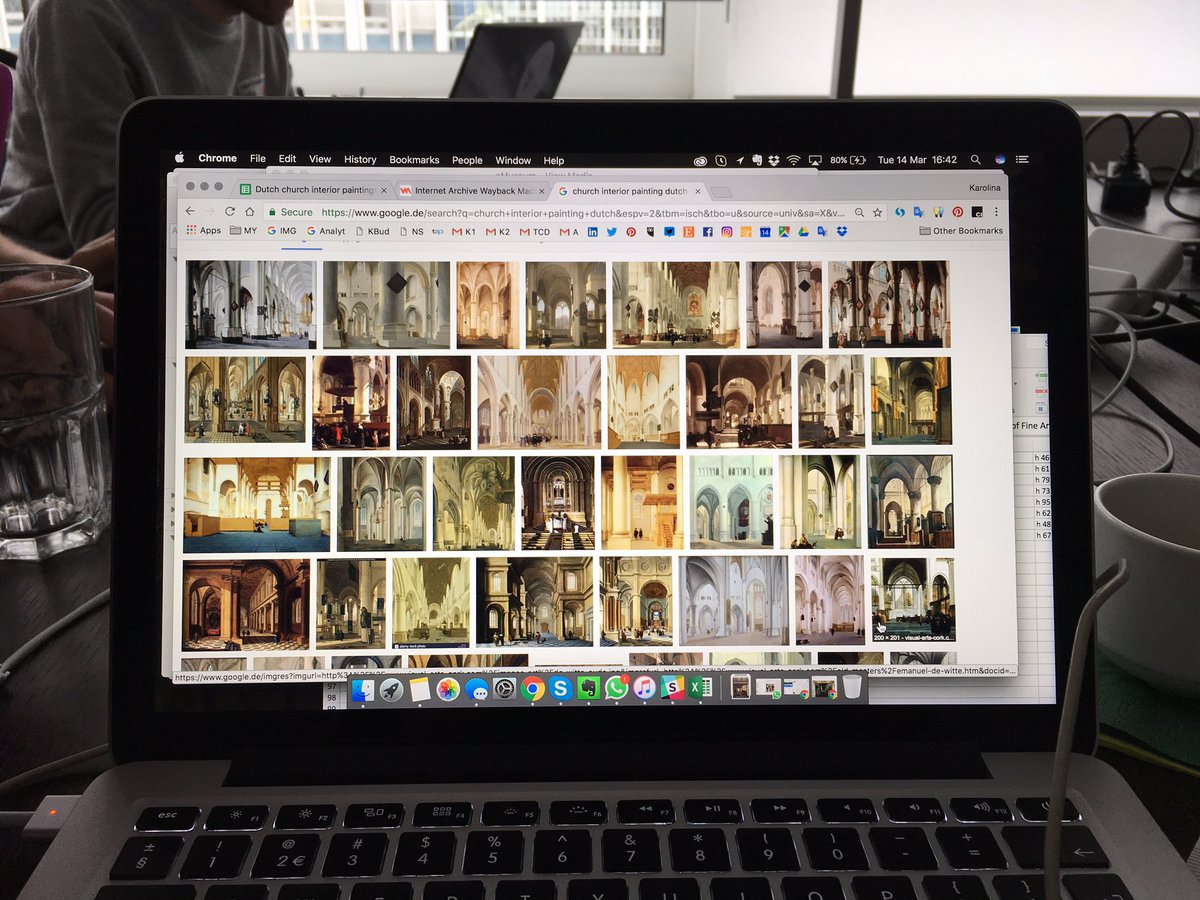
    The genre of church interior paintings has developed in the Netherlands in the middle of the 17th century and lasted only a few decades. It is represented by a relatively small group of specialized artists, such as: Pieter Jansz Saenredam (1597-1665), Emanuel de Witte (1616-1692), Hendrick Cornelisz Van Vliet (1611-1675), Gerard Houckgeest (ca.1600–1661), Anthonie De Lorme (c.1610-1673) and others. In many cases, the same church’s interior was depicted by the same artists dozens of times, however, the iconography, composition and vantage point (a position from which the interior is viewed) varied. One of the main factors in the development of this type of painting was the Reformation and its consequences, particularly the Calvinist approach to art. The so-called Beeldenstorm in 1566, a series of events during which churches were plundered and their Catholic decorations removed or destroyed, was a starting point of this far-reaching transformation of church interiors in the Netherlands. The churches became obsolete civic spaces filled with everyday activities, not exclusively restricted to preaching the God’s word any more. The altars, statues and other decorative elements were replaced by white-washed walls and simple panels filled with biblical excerpts instead of representations of saints and miracles. This is reflected in the church interior paintings, where we can see, for example, a woman breastfeeding, children at play, groups of gentlemen involved in conversations about business, couples strolling down the aisles, beggars and even dogs urinating. The latter was perhaps the strongest symbol of this transition of the church as a building: from a holy temple to a civic, urban and mundane space.
    There are hundreds of church interior paintings scattered across collections around the world. The research of this subject to date has focused mainly on particular artists or churches, rather than the overall genre and its network of artists and places. This project, born at Coding Dürer 2017, addresses this issue by providing a platform for further research on the paintings and creating an insight into the bigger picture of the genre for the first time. This visualisation of over 200 paintings of 26 different churches by 16 different artists was created with the following research questions in mind:

    • In what places the artists were active and in what places they depicted church interior(s)?
    • Did the artists have ‘favourite’ church interiors?
    • In what places and when could the artists possibly meet?
    • What church interiors were depicted the most?
    • What church interiors were depicted by most artists?


    DATASET

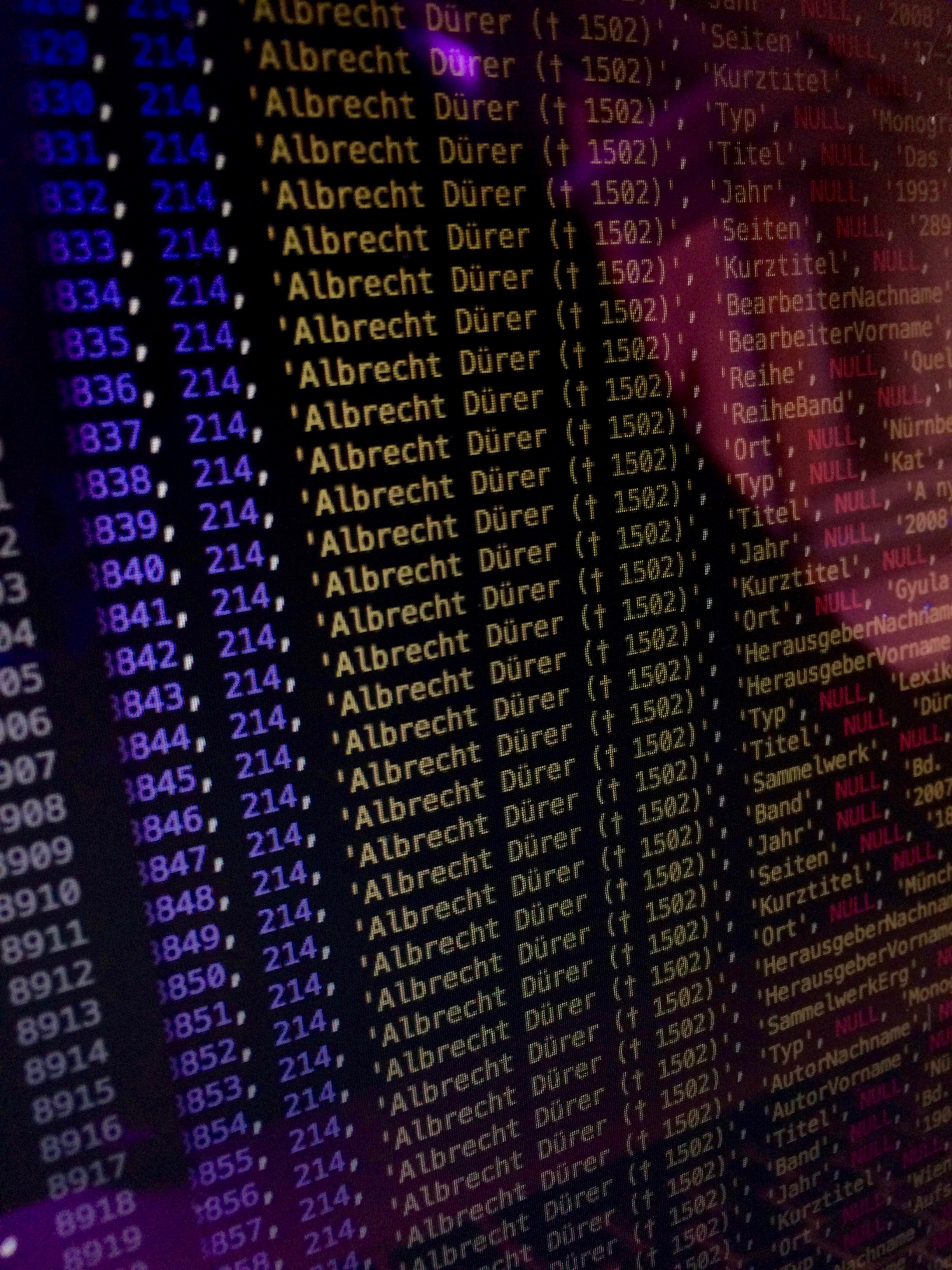
    The starting point of the project was a spreadsheet listing the paintings, artists, collections, etc. that was created for research purposes 2 years ago. This re-purposed data needed cleaning and additional information, e.g. IDs (artists, churches, paintings), locations (longitude, latitude), stable URLs for images.


    GOAL

    To create a map/visualisation that shows:

    1. Dutch churches depicted in the paintings (25)
    2. Artists’ activity (16+)

    TOOLS


  • Project Groups (4) – Meta Data Group

    Project Groups (4) – Meta Data Group

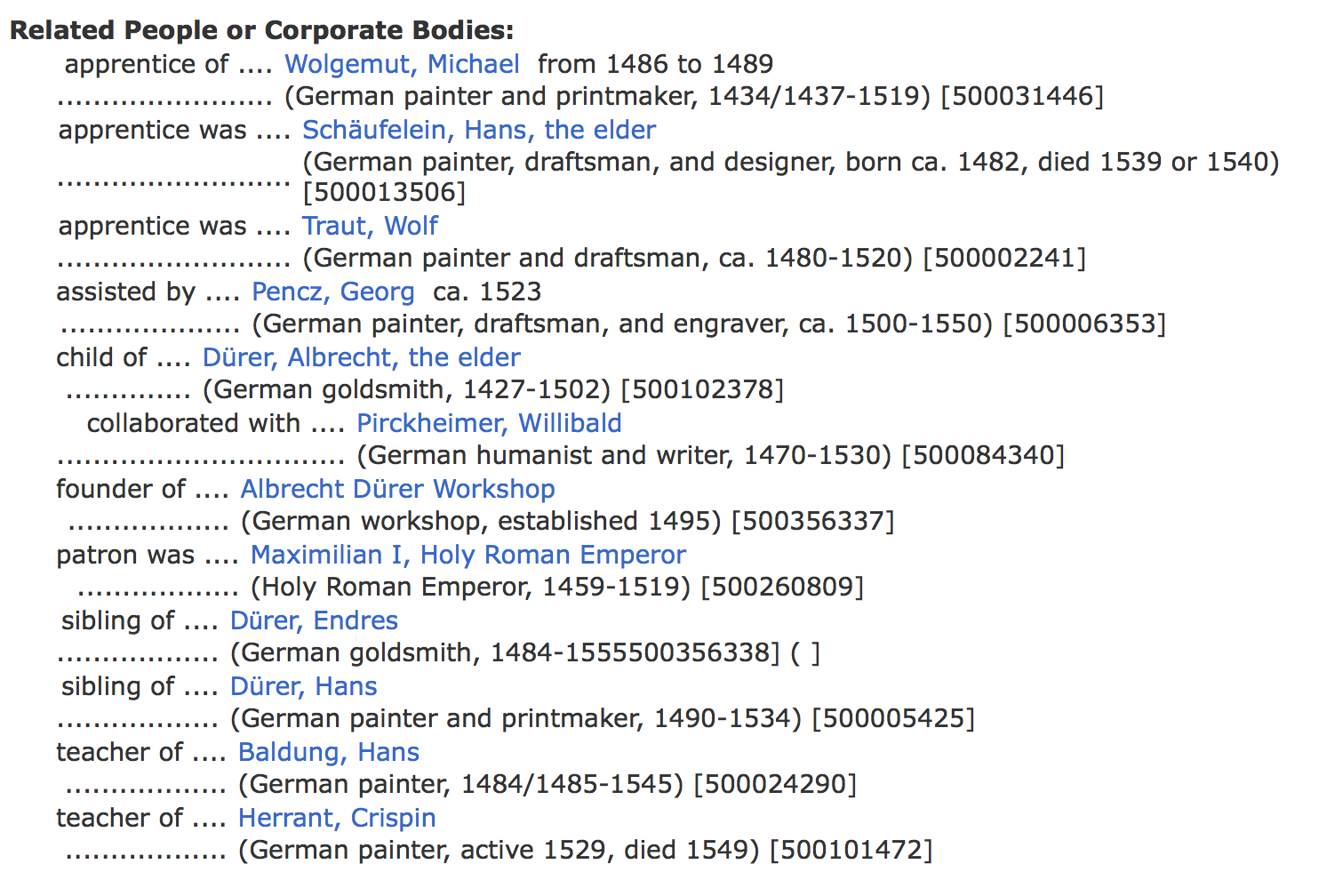
    The topic of visualization is quite popular at Coding Dürer. We already saw an approach in visualizing interactions of photographers with an artwork as well as an attempt to show how the work of an artist moves around the world throughout time. The “meta data group” engages in a project that relates to the person who gave the Hackathon its name: Albrecht Dürer. The group wants to show to whom and how the artist was related. By creating a graphic plot they want to answer the question of the artist’s relationship to his contemporaries in a way that is intuitive and easy to understand. The main challenge the team faces is to find data that fits their research question. ULAN, thUnion List of Artist Names from the Getty Research Institute, might offer a solution, as its data is organized in a network of categories like “assistant” or “teacher” which the team uses in recreating a network.

    Screenshot of ULAN data (a standardized list of artist’s names)
    The data that ULAN provides (as well as data from online research) can be visualized with the help of WebVowl and Gephi.
  • Project Groups (3) – Tracing Picasso

    Project Groups (3) – Tracing Picasso

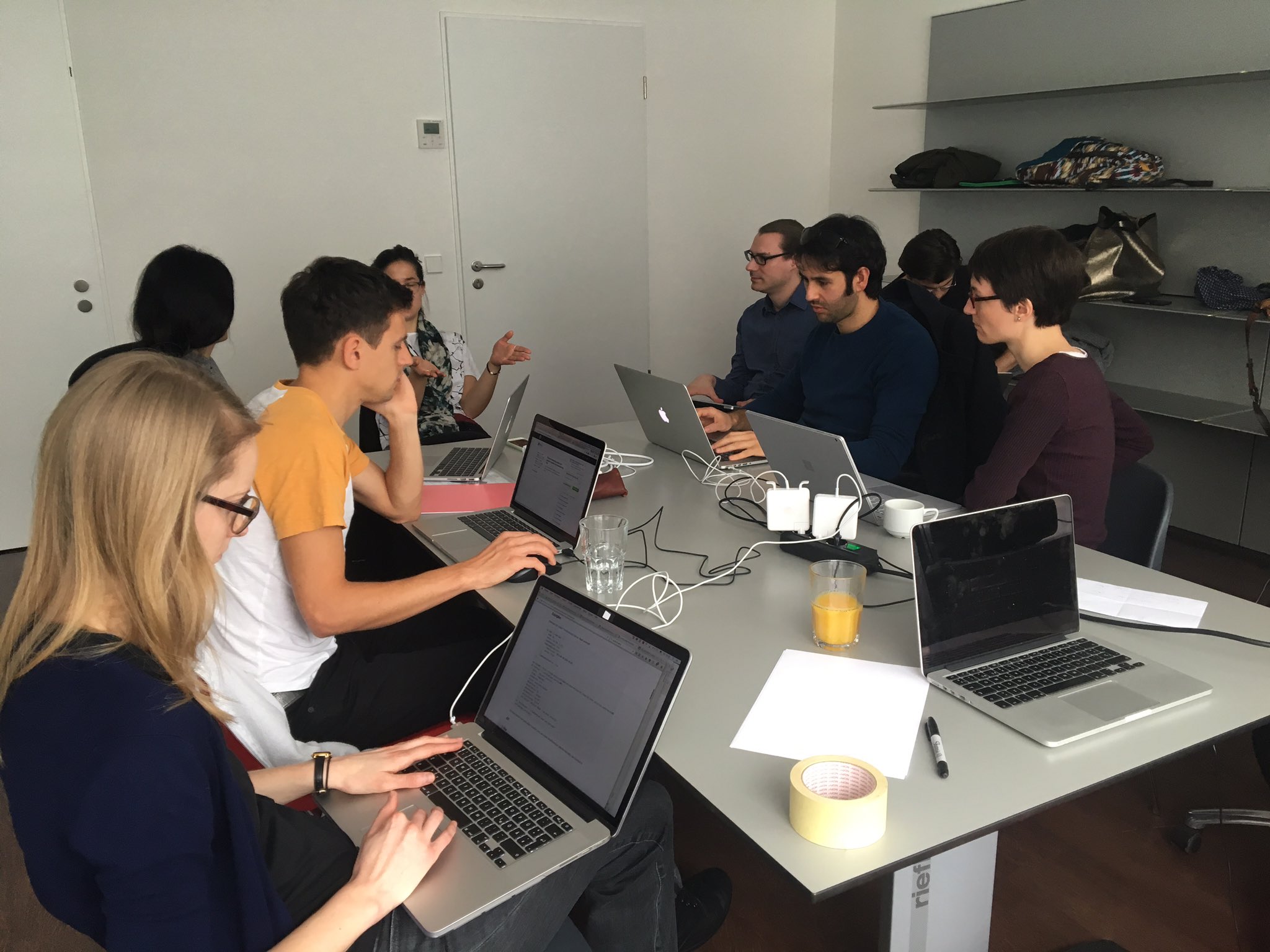
    Photo by @airun72

    Throughout his life Picasso created a huge body of work, including paintings, drawings as well as sculptures, that travelled around the world. It seems impossible to grasp how and where the objects moved. One project group at Coding Dürer tries to solve this problem and help us understand the provenience of Picasso’s work by using digital tools. They use OpenRefine to handle the metadata provided by the Met Museum and the MoMA. D3 offers great timeline librarys to visualize time and place. Combined with information about Picasso’s life and exhibitions their interactive tool can show us how Pablo and his work moved throughout time.

  • Collaborate Across Disciplinary Boundaries

    Art History and Computer Science are two disciplines with different approaches in doing research. Nevertheless, the digital material on art that is increasingly provided by museums or other cultural institutions with their online collections is interesting for both sides. While art historians have new possibilities to access, use, analyze and interpret their source material, computer scientists find datasets of artworks and thus images and metadata with quite particular characteristics. The challenge for art historians is to acquire the necessary technological knowledge and to apply suitable tools in order to draw upon the strengths a digital workflow offers. These are prerequisites for being able to adequately apply the advantages of technology to study art history in a digital environment and, at the same time, to establish new methods for the discipline. Computer scientists are interested in cultural data as a basis to develop applications and tools. Or they are curious to test it with existing prototypes to see what modifications are in need that these remain useful for that kind of data. This coincides with recent advances in computer science that particularly include topics in areas with a focus on visual data, like computer vision or machine learning with images, as well as all aspects around information retrieval and the semantic web.

    Several interesting resources from cultural institutions exist such as the Rijksmuseum, the Tate, but also on Europeana that provide images of artworks from their collections or at least the corresponding metadata that can be reused. The Getty Vocabularies, e.g., the United List of Artist Names (ULAN), are a powerful resource to enrich the metadata provided by the museums. Such a record includes information about spelling variants of the artist’s name across different languages, her or his birth and death place, further biographical facts and relationships with other artists. This small overview alone makes clear that technologically far more is possible than just using the databases to find images through a search mask and use these to traditionally study the artwork, compare it with other examples and write a text about it. Instead, by using the power of the semantic web, networks can be created with computational methods and allow to get an overview about a specific data set, which ideally allows to get new insights, different interpretations and interesting conclusions. Numerical values, such as color, amounts of digital objects or information etc., can be processed easily with computer technology. This means that statistics become important, what is contrary to the usual methods in art history. To use the data provided in digital art collections, e.g., in a data visualization – good examples can be found on Google Arts & Culture Experiments –, it is necessary to have the ability of how to use these APIs.

    There is often a gap between the knowledge and the skills of art historians on the one hand and computer scientists on the other. Whereas in art historical projects usually a satisfying use of technology is missing, innovative applications that use digital art collections are often interesting from a technological point of view and allow to predict future developments of, e.g., image search methods, but lack of providing in-depth knowledge of wider art historical relations or cultural contexts that are related to the artworks from different periods. It is important to take both sides equally into account for sophisticated tools or applications. Therefore, the idea of Coding Dürer is to offer art historians and information scientists a chance to collaborate in mixed groups to find challenging ideas and to initiate a fruitful dialog between both disciplines. The main focus is to enable the collaboration in interdisciplinary groups. This means that the largest part of the time is reserved to work on small, experimental projects with the aim to present a prototype at the end of the week. A few presentations by invited speakers during the week offer inputs from other perspectives. It will be also possible that participants give an insight in own projects that are of interest for the plenum.

  • Open Data. Open-ended

    The word “hackathon” is a blend of the words “hack” (in the sense of exploratory programming) and “marathon”. The hackathon Coding Dürer is modeled after the hackathon Coding Da Vinci organized by the Open Knowledge Foundation, Wikimedia Germany and others. Its goal is to encourage institutions to liberate their data and bring this data into a creative context from which innovative projects might emerge. Hackathons are often built around industrial or communal data such as traffic data. Coding Da Vinci, on the other hand, expressively puts its focus on cultural data. In 2014, 17 digital cultural projects were realized using 16 datasets.

    We need open data. Only if data is available to the public, citizens, scientists, coders are able to use them for ends that no one has thought of before. That entails of course that the resulting data and code is open as well.

    We need an open end in the project. There are no limits as to what can be done. There are no restrictions set by the data suppliers as to what should be done. The end of the project is open in order to fuel creativity. No targets are set in order to yield fascinating results. 

    The purpose of Coding Dürer now is quite similar to Coding Da Vinci: Open data and open-ended. Its focus, however, is on art-historical data and to bring art historians and coders together. What can we do with art-historical data? What insights into art history might we gain? How can data visualizations give us an understanding of art? How can we build meaningful applications upon those data? How can we bring this data into a context never thought of before?

    Data sources might be:

    We invite interested institutions to join us and take the chance to present their data sources to the interdisciplinary group of 40 people and see what they are able to accomplish within those five days in March and possibly beyond. Please get in contact with us.


    The preliminary schedule of the hackathon will be published on this website soon. Please check back in a few days.

    Update: The list of data sources is available here.